

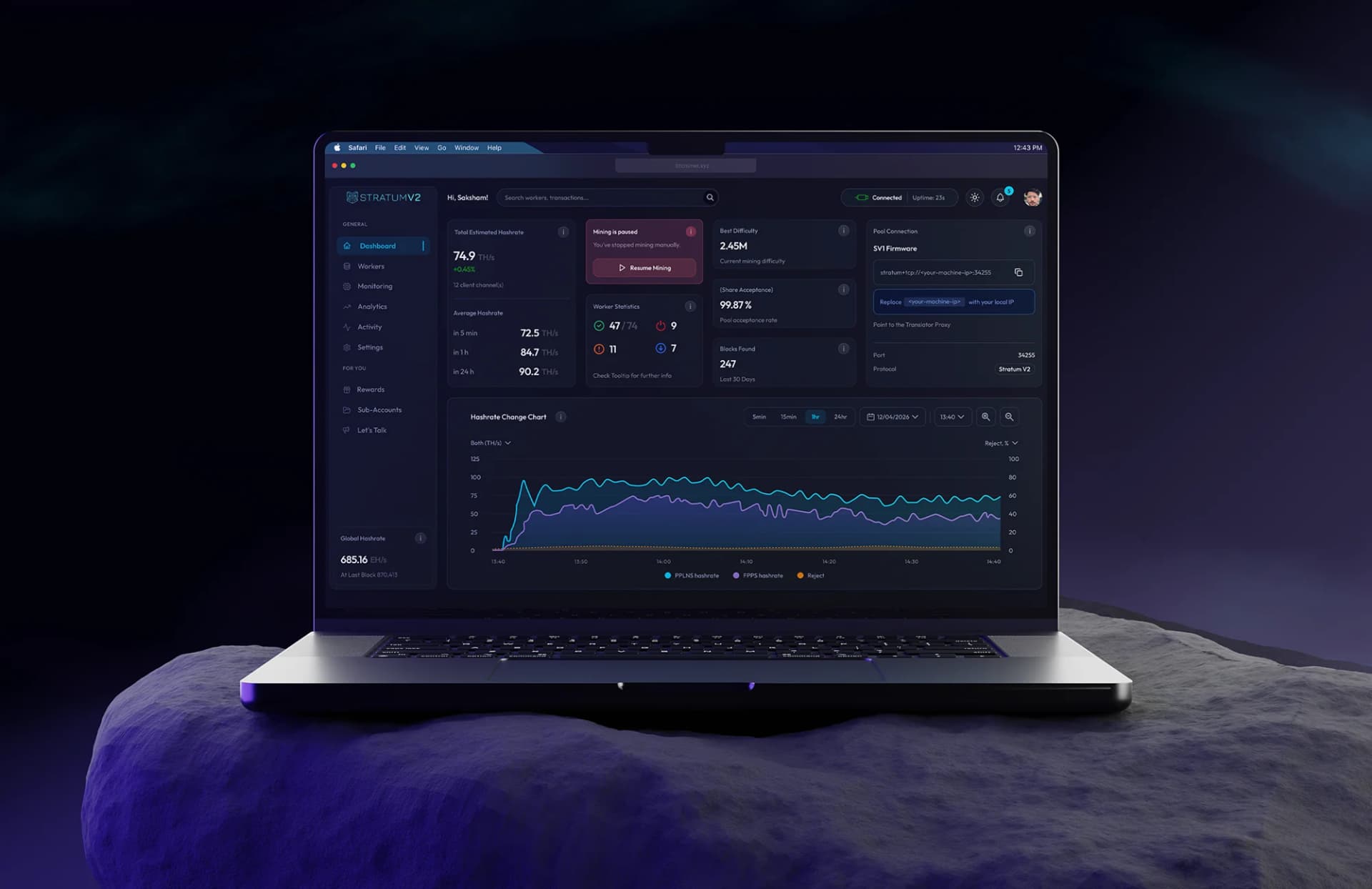
A complete design from scratch of a Bitcoin mining user dashboard: a global sidebar that scales with new sections, an enhanced top bar with search, connection status and a theme toggle, granular worker statistics, state-driven caution tiles, a detailed hashrate tile and an interactive dual-axis hashrate chart. All of it sits on a tokenised design system with matching light and dark themes, skeleton loading states and an annotated, interactive prototype.
Building a fully Stratum V2 pool, where miners take part in block construction instead of only supplying hashrate. That brings transparency and decentralisation, but also more operational and cognitive load. Contemporary dashboard works more like a local admin panel than a data-driven dashboard: top-bar navigation that can't grow, core metrics shown without context or trends, critical states such as stopped mining with no urgency or guidance, and a hashrate chart with no comparison or time-based insight.
I audited the existing interface and mapped its gaps, then designed on top of sv2-ui's own UI, logo and style. Early feedback sessions with 4–5 participants shaped the hierarchy, readability and comfort for long sessions. A competitive study of 10 mining dashboards, including Braiins Pool, Foundry USA, Antpool and Luxor, informed the patterns. Everything was built as reusable, state-aware components with semantic colour tokens that map 1-to-1 between light and dark, ready for a developer to build from.
HIGHLIGHTS
create
fun
things together


