
INDUSTRY
TECH STACK
Design Tool

Motion Tool

ROLES
COLLABORATORS
DELIVERABLES
TIMELINE & STATUS
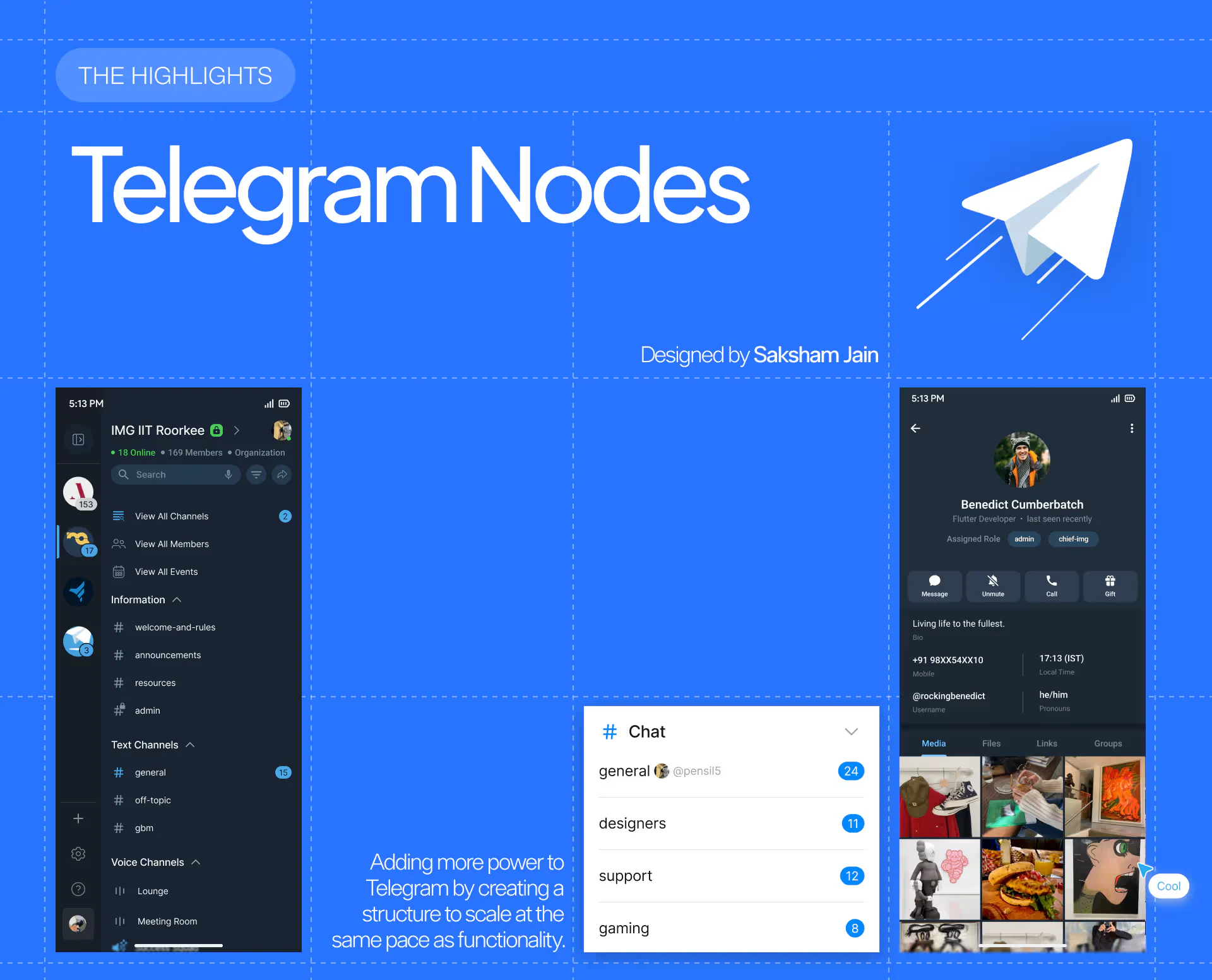
Design Telegram Nodes, a structured, switchable space within the existing app which serves as a professional and community workspace that can contain multiple chat types, including voice and video chats, support in-depth admin management and user roles.
Telegram was designed around a single inbox where all conversations live side by side. That model worked when usage was mostly personal chats and a few groups. Today, the same inbox contains personal conversations, work groups, large communities, broadcast channels, bots, alerts, automation, etc. This mix creates cognitive overload on the user and makes it difficult focusing on what matters most at any given time. Nodes aim to solve these problems by targeting work groups, large communities, broadcast channels, etc and letting users create dedicated spaces for these different aspects of their lives, each with its own identity, members, and conversation types.
Understanding the needs of this user-flow by competitive analysis. Designing Entry point, Node UI, profile management, settings, roles, etc. Ideating multiple iterations and narrowing down to the most feasible and user-friendly solutions. Ensuring consistency with Telegram's design system while introducing new elements for Nodes.
Contact me to
create
fun
things together
create
fun
things together
VERSION
2025©Edition
LOCAL TIME
SCORE
0
SOCIAL MEDIA


